The Prep That Doesn't Survive Contact With Real Kids
The lesson you build on Saturday and the lesson that actually happens on Sunday are two different things. Here's what survives contact with a real classroom and what falls apart the second the kids walk in.
Rachel Donovan
Curriculum Specialist, PopLesson · July 18, 2026
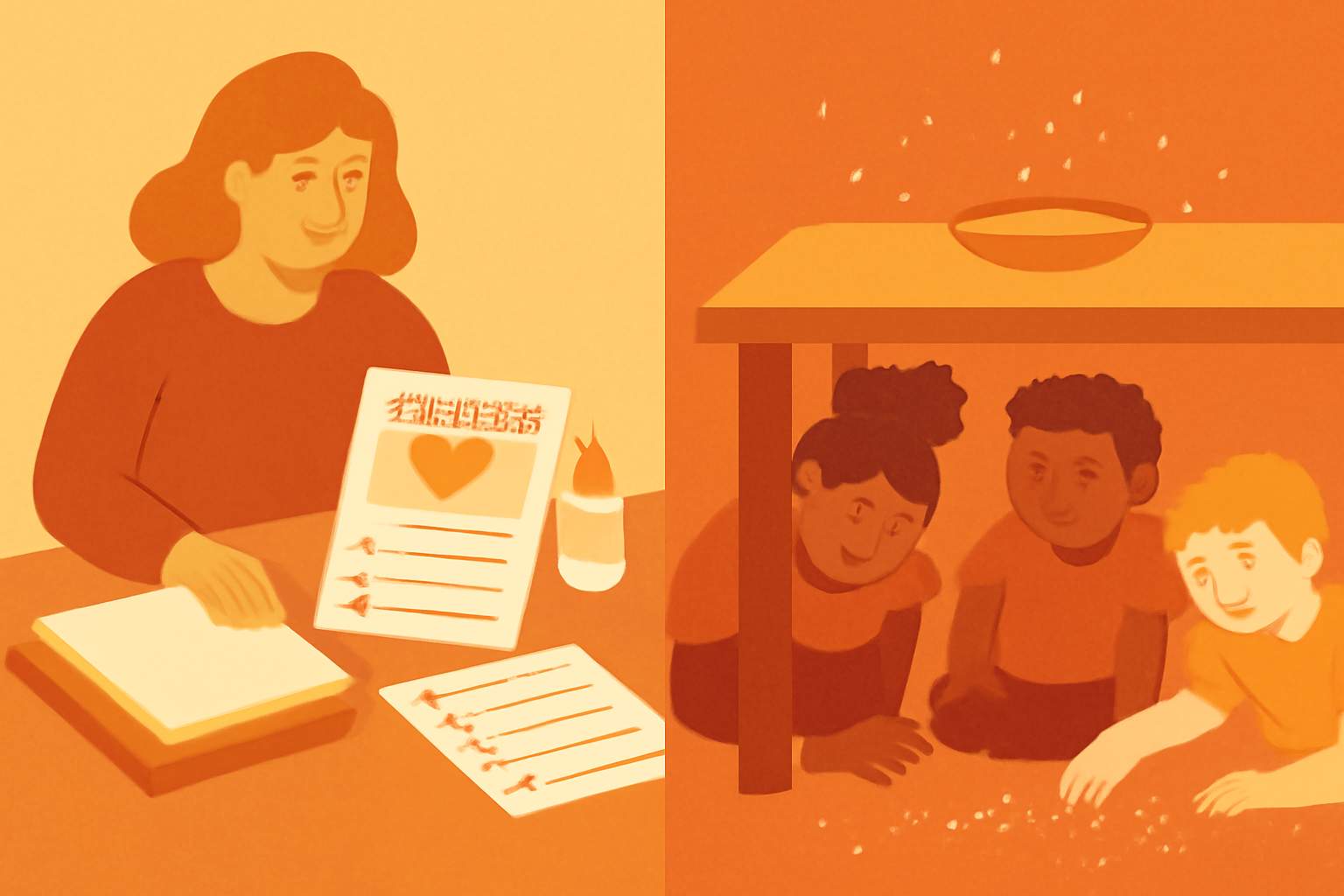
A teacher I worked with at a mid-size suburban church spent four hours on a Saturday building the perfect lesson on the Prodigal Son. Color-coded printouts. A discussion guide with eight open-ended questions. A craft involving glitter, which should have been the first warning.
By 9:52 on Sunday, three of her second graders were under the table and the glitter had migrated to places glitter should never go. She never made it past question two.
That gap, between the lesson you build and the lesson that actually happens in the room, is the thing nobody warns you about when you start collecting Sunday school teacher resources. You accumulate binders and downloads and Pinterest boards. What you don't accumulate is any real sense of what survives when eight-year-olds walk in cranky, tired, or wired on the donut they ate in the car.
So let me tell you what I've watched hold up, and what falls apart on contact.
The stuff that survives
The lessons that work in a real room share one boring quality: they have a spine you can teach even if 80% of your materials vanish. I mean that literally. If your projector dies, if the printer jammed Saturday night, if half your class didn't show and the other half is a different age group than you planned for, can you still teach the point?
In my experience, the answer is usually no, and it's not because the teacher is bad. It's because the lesson was built assuming everything would go right.
Here's what I started telling teachers to test before Sunday:
- Can you say the main point in one sentence, out loud, without notes?
- Do you have a physical object, a question, or a short story that carries the whole lesson even if nothing else works, because I have watched a single well-chosen object (a broken phone, a jar of dirty water, a locked box with the key hidden across the room) hold a squirrelly class of twelve for a full twenty minutes when a beautifully formatted six-page lesson plan couldn't hold them for four?
- What's your plan for the kid who finishes early?
That last one gets skipped constantly. And the early finisher is who blows up your room.
Build for the 20-minute mark
Every lesson I've ever watched fall apart falls apart around the same time. Twenty minutes in. The novelty of you being at the front is gone, the story is mostly told, and there's still a chunk of class left. That's the danger zone.
Good prep front-loads energy at the wrong time. Teachers pour everything into a killer opening and then coast, and the coast is exactly where kids check out. To be honest, I did this for years before I noticed the pattern. I'd nail the hook and then die in the middle.
What actually helps is building your second-strongest moment for minute eighteen, not minute two. Save something. A reveal, a twist in the story, a hands-on thing, a question you actually don't know the answer to and let them wrestle with. Kids can smell a rhetorical question. They cannot resist a real one.
I won't pretend I have this fully figured out. Some Sundays the room just has a weird energy and nothing lands, and I've never cracked why one week the same lesson soars and the next week it face-plants with a nearly identical group. If someone tells you they've solved that, they're selling something.
One caveat: this whole approach assumes you're teaching kids or a group that gets antsy. If you're running an adult Bible study where people came specifically to sit and dig into a text, front-loaded structure matters way less, and honestly the 20-minute rule mostly evaporates. Adults will give you their attention as long as you don't waste it. Kids make you earn every minute, again, every single week.
So before you spend Saturday building something gorgeous, ask what's left if it all goes sideways. Because some of it will. It always does.
Rachel Donovan
Curriculum Specialist, PopLesson
Build your next curriculum with ForgeAI
Describe your topic, your group, and your goals. PopLesson builds a complete lesson series. Free to build, $3 to download.