The Closing Prayer Is Where Your Lesson Actually Falls Apart
Most teachers obsess over the hook and the activity, then improvise the closing every single week. But the last five minutes are the only part of the lesson a kid actually carries home. Here's why the ending is the real point, and how to build it first.
Rachel Donovan
Curriculum Specialist, PopLesson · June 28, 2026
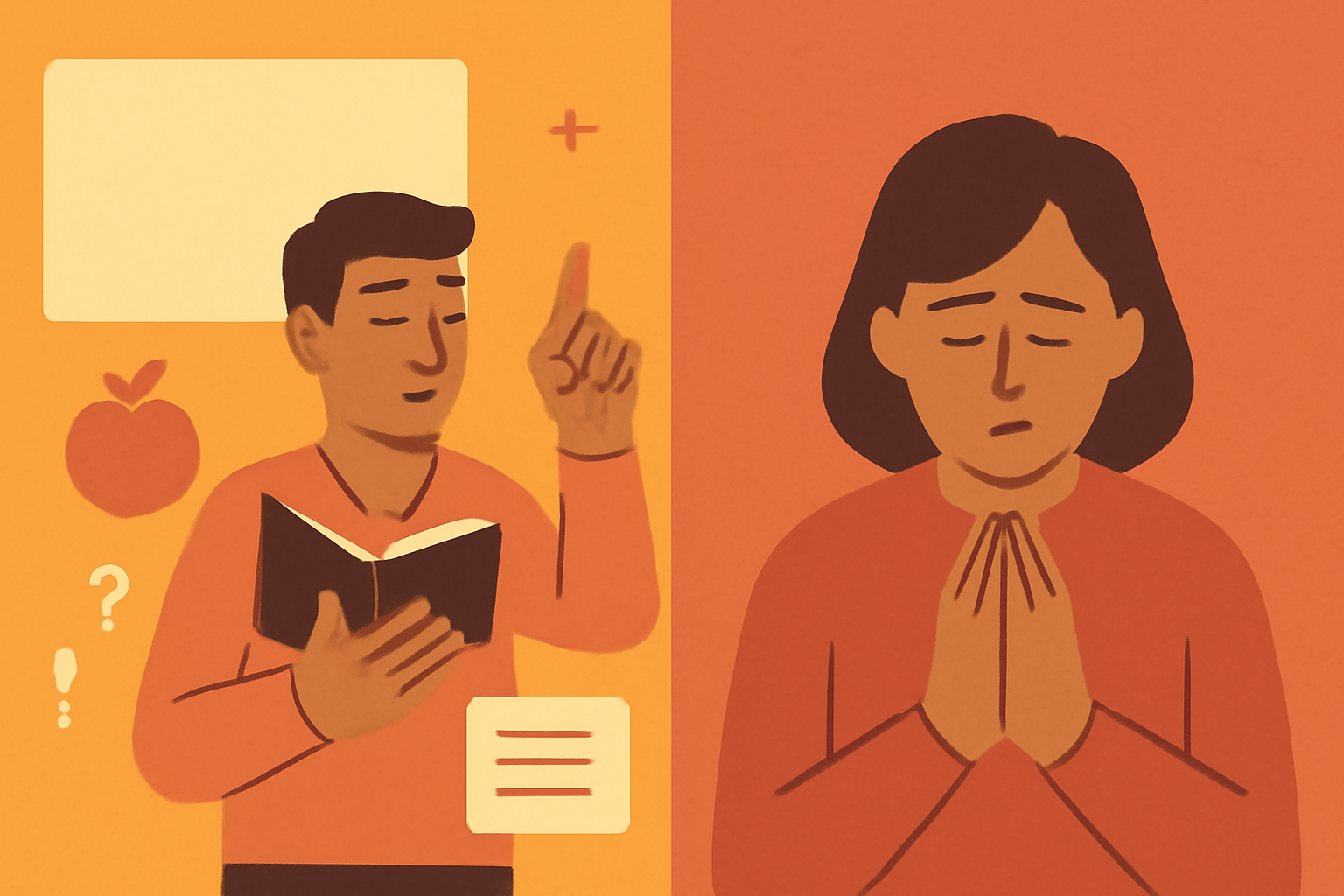
Nobody plans the last five minutes of a lesson. That's the whole problem.
We agonize over the hook. We pick the perfect object lesson, we rehearse the Bible story, we color-code the discussion questions. And then we get to the part where the class is supposed to land somewhere, and we just sort of wave our hands and say "so let's close in prayer." I did this for years before I noticed I was doing it. The lesson had a beginning and a middle. The end was an afterthought I improvised every single week.
The last five minutes are not the cool-down. They're the only part of the lesson the kids carry into the car.
Think about what actually sticks. It's almost never the activity. I watched a fourth grade class build an entire Noah's ark out of popsicle sticks one Sunday, glue everywhere, total chaos, genuinely fun. The next week I asked what they remembered. Not one kid mentioned the ark. They remembered the question the teacher asked at the very end, right before prayer: "Has anyone ever asked you to do something that didn't make sense?" Hands shot up. Stories poured out. And then class ended and that gold got swept into the recycling bin with the popsicle sticks.
That's the part most curriculum gets backwards. The printed plan front-loads everything. Forty minutes of buildup, then "review and dismiss." Review and dismiss. Like the landing doesn't matter.
Most lesson plans treat the ending as cleanup. The good ones treat it as the point.
Here's the thing I had to unlearn. The closing isn't a summary of what you taught. It's the one moment where you hand the lesson over to the student and make them do something with it. A summary tells them what happened. A real close asks them to decide something, name something, or commit to noticing something this week. Those are completely different jobs, and most of us do the first one because it's easier and the clock is screaming at us.
When I started building my own closings on purpose, I gave myself a rule: the last question had to be answerable on a Tuesday. Not "what did Jesus teach about forgiveness," which is a quiz question and dies in the room. Something like "who's one person you're going to have a hard time being kind to this week, and what's one thing you could actually do?" That travels. That's still rattling around in a nine-year-old's head at school on Wednesday.
I'll be honest, I don't always know why some closings land and others die flat. I've used the same closing question with two different classes and watched it crack one room wide open and get total silence in the other. Same words. Same age group. I have theories (the room temperature, whether they trust each other yet, whether one loud kid sets the tone) but I don't have a clean answer. Anyone who tells you they've got the perfect closing formula has never taught the same lesson to two different groups of eight-year-olds.
The operational fix is dumb and it works. Plan the last five minutes first. Before you pick the craft, before you pick the game, write the sentence you want a kid to be able to finish when their mom asks "what'd you learn today?" Then build backward toward it. Whether you're pulling a printed quarterly off the shelf or using a free lesson plan builder to generate something custom, the tool will give you a closing slot that's basically blank by default. That blank is yours to fill, and it's the most important real estate in the whole plan.
A caveat, because this isn't universal: with the really little ones, preschool and young kindergarten, the close is more about feeling than thinking. You're not getting a reflective answer out of a four-year-old. The "landing" for them might just be one repeated phrase they can sing in the car. Don't build them a discussion ramp they can't climb. That's a different design problem and I've watched well-meaning teachers ask preschoolers to "reflect on what God is calling them to" and get blank stares and a kid eating a crayon.
The middle of your lesson can be a mess and the class will survive. I've taught through a fire drill, a power outage, and a kid throwing up on the felt board, and the lessons were fine, because the kids still left with the one thing I wanted them to leave with. But a lesson with a beautiful middle and a mumbled "let's pray" at the end? That kid leaves with nothing but the memory of glue on their hands.
Stop improvising the part that matters most.
Rachel Donovan
Curriculum Specialist, PopLesson
Build your next curriculum with ForgeAI
Describe your topic, your group, and your goals. PopLesson builds a complete lesson series. Free to build, $3 to download.