The Silence After a Discussion Question Isn't What You Think It Is
Silence after a discussion question isn't dead air to be filled. It's an adult brain doing real work, and most teachers kill it before it pays off. Here's the count that changed how I facilitate, and where it breaks down.
Rachel Donovan
Curriculum Specialist, PopLesson · July 10, 2026
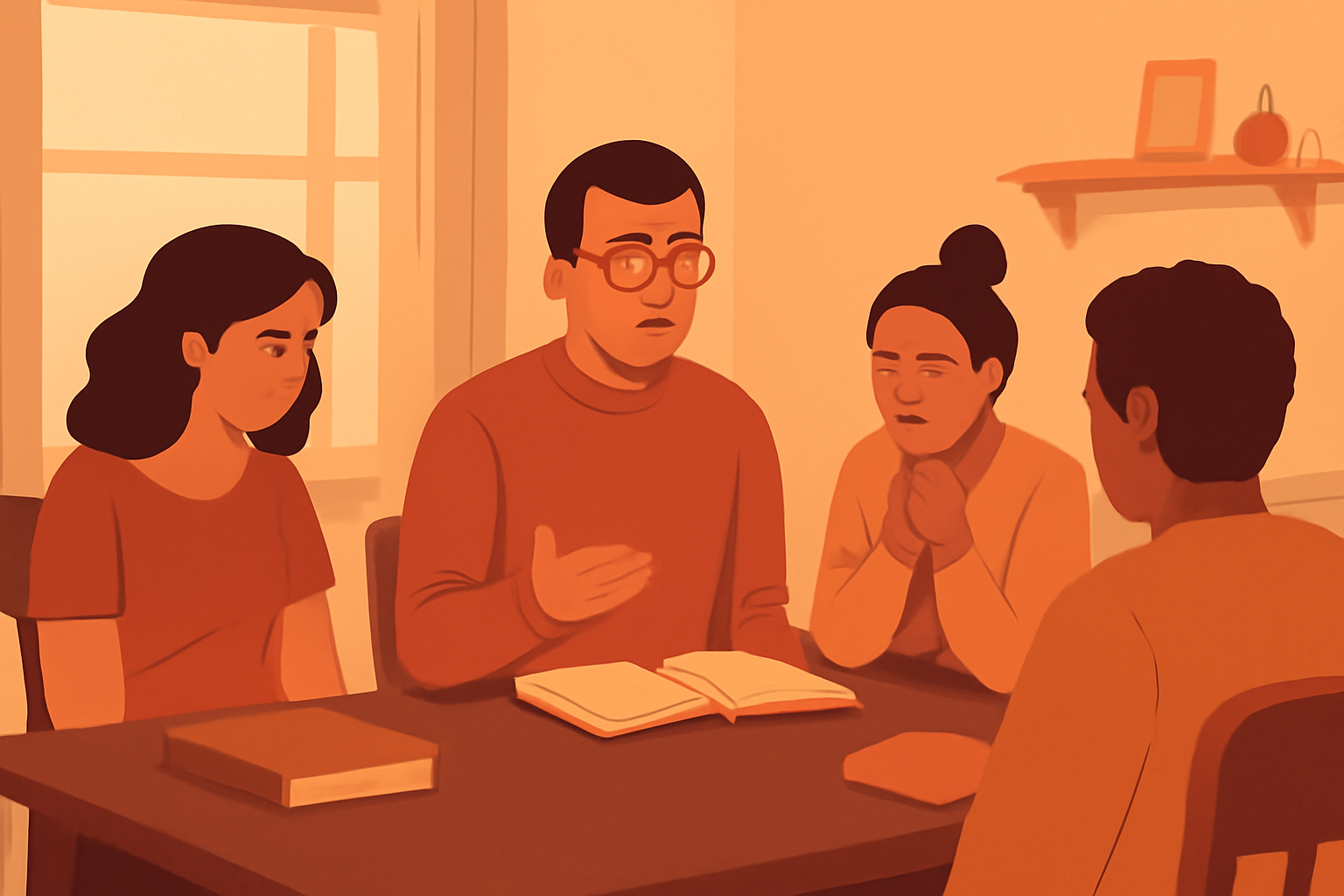
Most teachers treat silence like a fire that needs to be put out. It isn't. It's the most useful thing that happens in a small group, and we keep stomping it out before it does its job.
I learned this the hard way in a mid-size suburban church, teaching a Wednesday night group of about nine adults. I asked a question about a passage in Mark, one I thought was pretty easy, and got nothing back. Three seconds of quiet. Maybe four. And I panicked. I answered my own question, moved on, and felt relieved that we'd "kept the energy up." It took me years to understand that I hadn't kept anything up. I'd taught those nine people that they didn't actually need to think, because I'd do it for them.
A discussion question isn't a performance cue. It's a processing request. And processing takes longer than four seconds.
Here's what I didn't understand back then. When you ask a real question, an adult brain has to do a few things in sequence: figure out what you actually mean, retrieve what they know, decide whether they're willing to say it out loud in front of people they see every Sunday, and then form a sentence. That's a lot. In my experience the people who answer in the first two seconds are almost never the people who thought the hardest. They're just the fastest talkers. And if you reward speed, you build a group that runs on the same two extroverts every week while everyone else coasts.
I've watched this pattern hold across every setting I taught in, from a rural congregation where the whole group could fit around one folding table to a large multisite with breakout rooms. The dynamic doesn't change with church size. What changes is how much room the teacher is willing to leave.
The count that changed how I facilitate
Somewhere along the way I started counting. Silently, in my head. When I ask a question, I count to ten before I say anything else. Ten full seconds. The first time you do this it feels insane. It feels like the room is falling apart. It is not falling apart. It is thinking.
Usually somebody answers around second six or seven. Not the fast talker. Somebody who was actually chewing on it. And the answer is almost always better than what I would have gotten at second three, because it came from someone who needed the extra time and finally decided the risk was worth it.
I'll be honest about where this breaks down, because it does. If you count to ten and get nothing, ten more seconds of silence will not save you. That's not thinking silence anymore. That's confused silence, and they feel completely different once you've learned to tell them apart. Confused silence means the question was bad, not that the people were lazy. When I hit that wall, I don't repeat the question louder (which is what I used to do, as if volume were the problem). I rephrase it smaller. I make it concrete. "What did Peter actually do in that verse?" beats "What can we learn about faith here?" every single time.
Why the good small group Bible study lessons build silence in on purpose
The best small group Bible study lessons I've worked with don't just list discussion questions. They tell you which questions are worth waiting on and which ones are just transitions. That distinction matters more than most curriculum admits. A transition question ("So what happens next in the story?") doesn't need silence. A wrestling question does. When a lesson treats every question the same, it trains teachers to rush all of them equally.
I don't think most published curriculum gets this right, and I've used a lot of it across three churches and eleven years. The questions look fine on paper. They just assume a pace that no real room actually runs at. You get a list of eight questions for a forty-five minute class, and if you asked all eight the way they're written you'd either finish in twenty minutes or spend the whole time answering them yourself. Neither is teaching.
Here's the part I'm still not sure about. I don't know if the ten-count works as well in kids' rooms. With eight-year-olds, silence reads differently, and a squirmy kid who's quiet for ten seconds might just be planning to leave the rug. I've had it work with older elementary and it clearly does not work the same with preschoolers, but I couldn't tell you the exact age where it flips. If someone's studied that, I'd genuinely like to see it.
What I can tell you is that for adults and teenagers, the number one thing standing between a flat discussion and a real one is usually not the question, the room, or the curriculum. It's whether the person up front can sit in a few seconds of quiet without flinching.
Most of us can't. That's the actual problem. Not the lesson.
Rachel Donovan
Curriculum Specialist, PopLesson
Build your next curriculum with ForgeAI
Describe your topic, your group, and your goals. PopLesson builds a complete lesson series. Free to build, $3 to download.